
From Rendering to Reality: How a Custom Cosmetics Display Cabinet Is Made
Updated: Jul 29
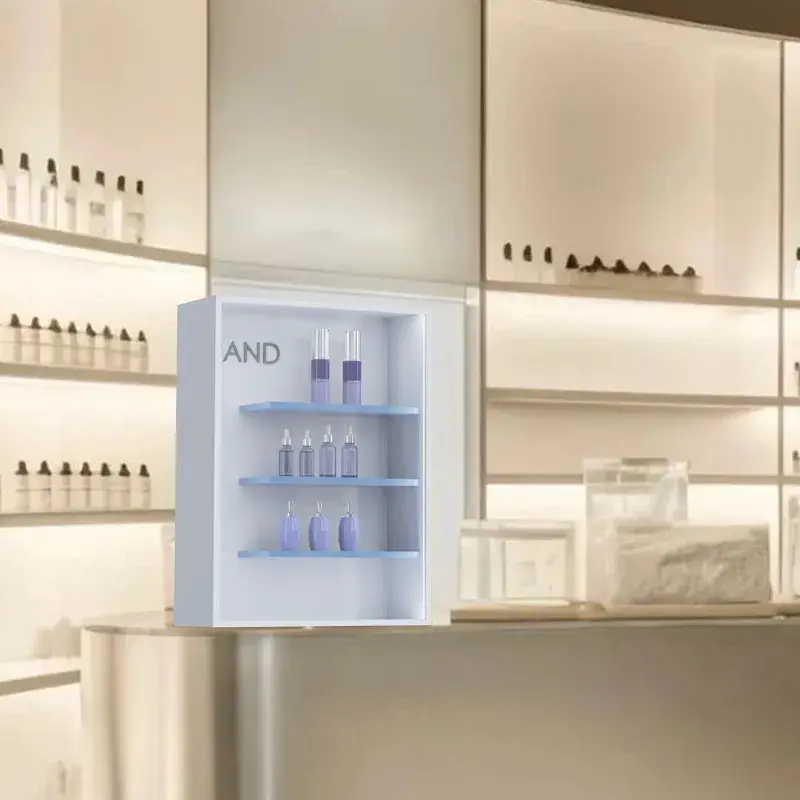
A cosmetics display cabinet may begin as a design rendering, but turning that concept into a finished fixture for a shopping mall, beauty counter, pop-up store, or branded retail space requires much more than simply copying the image.
Before installation, the project usually goes through structural development, material selection, sampling, fabrication, assembly, lighting installation, quality inspection, packing, transportation, and on-site installation.
For customers, the display cabinet is where skincare, makeup, perfume, and beauty devices are presented. For brands, it also serves several important purposes: communicating brand identity, highlighting hero products, guiding customer flow, and improving the overall retail experience.
A rendering mainly answers the question, “What should the display look like?” Manufacturing must also answer several practical questions:
Can the design be produced efficiently?
Is the structure stable and safe?
Is it convenient for daily retail use?
Can it be transported without damage?
Will the finished cabinet match the brand’s quality standards?
At Caamatech, we manufacture custom cosmetics display cabinets, retail fixtures, branded counters, and visual merchandising props for beauty brands, retail design companies, visual merchandising agencies, and commercial contractors.
This article explains how a cosmetics display cabinet moves from a design rendering to a finished retail installation.

1. Review the Rendering and Project Requirements
The first step is to review the design rendering together with the project specifications, brand guidelines, construction drawings, and site information.
The same visual concept may require very different structures depending on where it will be used. A wall-mounted cabinet, mall kiosk, freestanding island unit, countertop display, and temporary pop-up fixture all have different requirements for size, stability, wiring, storage, and installation.
Before engineering begins, the following information should normally be confirmed:
Overall display cabinet dimensions
Installation location and retail environment
Product categories and quantities
Product dimensions and weight
Lighting, lightbox, or digital-screen requirements
Drawer, storage, tester, or consultation-area requirements
Mall electrical and fire-safety standards
Permanent, seasonal, or promotional use
Shipping method and installation conditions
These details directly affect the structure, materials, production process, and final cost.
2. Turn the Rendering Into Production Drawings
A rendering communicates color, shape, lighting, atmosphere, and overall visual style. However, a factory cannot manufacture a reliable display cabinet from a rendering alone.
The engineering team must translate the concept into detailed production drawings. These drawings normally include:
Overall and sectional dimensions
Internal support structure
Material specifications and thicknesses
Hardware and connection methods
Shelf positions and load requirements
Lighting and electrical locations
Cable routing
Assembly details
Installation points
Removable and fixed components
During this stage, engineers solve practical issues that may not be visible in the rendering.
For example, a floating shelf may look simple and lightweight in the design, but the actual cabinet may require a hidden metal support. A large illuminated back panel needs internal space for LED modules, wiring, ventilation, and maintenance. A curved cabinet may require bent plywood, laminated panels, a metal frame, CNC-shaped components, or molded parts.
Good engineering should preserve the appearance of the original concept while improving stability, production efficiency, transport safety, and ease of installation.
3. Select Materials According to the Design
A cosmetics display cabinet is rarely made from one material. Most projects use a combination of wood, metal, acrylic, glass, lighting components, decorative panels, and branded graphics.
Each material should be selected according to the required appearance, function, durability, weight, and budget.
Wood-Based Materials
MDF, plywood, particleboard, and veneered panels are commonly used for cabinet bodies, bases, drawers, doors, and storage structures.
Wood-based materials are flexible to process and suitable for straight shapes, curves, grooves, recessed panels, and decorative profiles. They can be finished with:
Spray paint
High-gloss lacquer
Matte lacquer
Wood veneer
Laminate
Fire-rated surface material
Stone-effect panels

Metal
Stainless steel, mild steel, aluminum, and brass are often used for frames, trims, shelf supports, decorative strips, logo structures, and reinforcement components.
Depending on the brand style, metal surfaces can be finished with:
Mirror polishing
Brushing
Powder coating
Electroplating
Antique treatment
Spray painting
Metal components are especially useful when the display needs slim profiles, high strength, premium detailing, or concealed structural support.
Acrylic
Clear, frosted, tinted, and colored acrylic is widely used for product holders, illuminated shelves, logo panels, lightbox covers, and protective enclosures.
Acrylic creates a clean and lightweight appearance that works particularly well for skincare, makeup, and fragrance displays.
However, acrylic production requires careful control of edge polishing, bonding marks, surface scratches, heat bending, and color consistency.
Glass
Tempered glass can be used for shelves, doors, countertops, and enclosed display areas.
Glass gives cosmetics displays a transparent and premium appearance. Its thickness must be selected according to the shelf size and load. Edge finishing, drilling, hardware positions, and safety requirements should also be considered during the engineering stage.
Stone and Stone-Look Materials
Natural stone, engineered stone, sintered stone, and lightweight stone-effect panels are often used for countertops, bases, plinths, and decorative surfaces.
Real stone provides an authentic premium texture, but it also increases weight, shipping cost, and installation difficulty.
For pop-up stores or fixtures that need to be moved frequently, lightweight stone-look materials may provide a more practical solution.
Leather and Fabric
Leather, PU leather, velvet, suede, and woven fabric can be used for product trays, drawer linings, consultation areas, tester sections, and decorative panels.
These materials add softness and detail to the display while helping protect delicate product packaging.
The most expensive material is not always the best choice. A successful material plan should balance appearance, durability, weight, maintenance, budget, and manufacturability.
4. Produce Samples and Confirm Colors and Finishes
Color and surface finish are among the most sensitive parts of a branded retail project.
A color shown on a computer screen may look very different when applied to painted MDF, powder-coated metal, printed acrylic, fabric, or glass. Lighting conditions can also change how the color appears.
Before mass production, physical samples are usually prepared for approval.
Samples may include:
Paint color and gloss level
Powder-coated metal
Electroplated metal
Mirror or brushed finishes
Brushed-grain direction
Acrylic color and transparency
Wood-grain or stone-pattern surfaces
Logo size and production method
Printed graphics
LED color temperature and brightness
High-gloss paint, mirror metal, and clear acrylic require particularly careful surface preparation. Small defects become more visible on reflective or transparent materials, so sanding, polishing, spraying, bonding, and protective treatment are essential.
For multi-store projects, approved master samples also help maintain consistency across the entire production batch.
5. Manufacture Each Module
Once the drawings and samples are approved, the project enters full production.
Different components may be manufactured in separate departments at the same time, including woodworking, metal fabrication, acrylic processing, glass production, spray finishing, electroplating, printing, and lighting assembly.
Woodworking
The woodworking team cuts panels, creates profiles, assembles cabinet structures, applies edge finishing, sands surfaces, and performs trial fitting.
For curved or irregular designs, templates or CNC-machined parts may be required to ensure that all sections align correctly.
Metal Fabrication
Metal components are cut, bent, welded, ground, polished, and prepared for surface treatment.
For exposed metal parts, welds and joints must be clean and smooth. Mirror-polished and brushed metal also require careful control of scratch protection and grain direction.
Acrylic Processing
Acrylic components may go through:
Laser cutting
CNC machining
Heat bending
Bonding
Flame polishing
Mechanical polishing
UV printing
Screen printing
Clear acrylic requires especially precise workmanship because bubbles, bonding lines, scratches, and uneven edges can affect the final appearance.
Surface Finishing
Painted cabinet components normally go through several stages of primer, sanding, inspection, and topcoat application.
High-gloss lacquer usually requires more preparation and polishing than matte finishes. It creates a strong luxury effect but also shows fingerprints and surface imperfections more easily.
Matte and satin surfaces are often more practical for areas that customers touch frequently.
6. Install the Lighting and Electrical System
Lighting is one of the most important elements in a cosmetics display cabinet.
Well-designed lighting can highlight packaging, improve color presentation, create visual hierarchy, and make the overall fixture more attractive.
Common lighting methods include:
LED shelf lighting
Recessed LED strips
Spotlights
Lightboxes
Illuminated logos
Under-cabinet lighting
Edge-lit acrylic
Decorative ambient lighting
The lighting system should be planned together with the cabinet structure rather than added at the end of production.
Important considerations include:
Color temperature
Color rendering
Light uniformity
Glare control
Heat dissipation
Power-supply location
Transformer access
Cable concealment
Maintenance and replacement
Plug type and local electrical standards
Skincare and fragrance displays often work well with soft and even illumination. Makeup displays usually require good color rendering so that product shades do not appear inaccurate under the store lighting.
All wiring should be concealed inside the structure where possible, while still allowing access for future maintenance.
7. Add Logos and Brand Graphics
A cosmetics display cabinet is not only a product display fixture. It is also an important brand communication tool.
Brand logos can be produced using:
Metal letters
Acrylic letters
Illuminated letters
Screen printing
UV printing
Laser engraving
Etched panels
Raised three-dimensional logos
Campaign graphics may be displayed through:
Lightbox fabric
Printed panels
Magnetic graphics
Replaceable acrylic inserts
Posters
Digital screens
For permanent retail stores, the logo structure may be fixed and integrated into the cabinet. For seasonal campaigns and product launches, replaceable graphics allow the same fixture to be reused for future collections.
Logo placement should be checked together with the final product arrangement. A logo that looks visible on an empty rendering may become partially covered after products are placed on the shelves.

8. Conduct a Full Factory Trial Assembly
After the modules are completed, the display cabinet should be assembled and tested in the factory before shipment.
Factory trial assembly helps confirm that all parts fit correctly and allows problems to be identified before the fixture reaches the retail site.
During trial assembly, the team normally checks:
Overall dimensions
Alignment of cabinet sections
Joints and corner quality
Door and drawer movement
Shelf level and position
Product-holder locations
Logo and graphic alignment
Lighting uniformity
Electrical performance
Structural stability
Appearance with products installed
Where possible, actual products or accurate product samples should be placed on the fixture. This allows the team to verify shelf spacing, product capacity, viewing angles, support points, and load performance.
For large rollouts, one complete prototype or first production unit is often approved before batch manufacturing begins.
9. Carry Out Quality Inspection
Cosmetics displays are viewed at close range, so even small defects can affect the perceived quality of the entire retail environment.
Before packing, the display cabinet should go through a detailed quality inspection.
Typical inspection points include:
Scratches, dents, stains, and color differences
Paint runs, dust particles, or uneven texture
Consistency of metal finishes
Acrylic cracks, glue marks, or poor polishing
Safe and smooth glass edges
Correct logo size and position
Lighting and electrical performance
Secure wiring and power supplies
Complete hardware and accessories
Cabinet balance and stability
Correct installation parts and instructions
For batch production, consistency between units is just as important as the quality of each individual cabinet.
Dimensions, colors, lighting, materials, and logo positions should remain consistent across all stores.
10. Design Packaging for Safe Transportation
Completing the cabinet in the factory is not the end of the project. The display must still survive handling, loading, vibration, impact, compression, and changing environmental conditions during transportation.
Packaging should be designed according to the cabinet’s size, weight, surface finish, structure, and shipping method.
Common protective materials include:
Surface-protection film
EPE foam
EVA foam
Corner protectors
Bubble wrap
Individual cartons
Plywood crates
Separate accessory boxes
Moisture-resistant bags
Desiccants
Direction and handling labels
Mirror metal, high-gloss lacquer, glass, and clear acrylic require extra protection against scratches and impact.
For international shipping or large retail programs, modular construction is usually recommended. Cabinet bodies, lightboxes, shelves, logos, graphics, and decorative parts can be packed separately and assembled on site.
This approach helps reduce shipping volume, protect finished surfaces, and simplify handling.
11. Complete On-Site Installation and Final Adjustment
After the display cabinet arrives at the shopping mall or retail store, the installation team assembles and adjusts the fixture according to the site conditions.
Typical installation work includes:
Positioning the cabinet
Connecting modules
Leveling the structure
Fixing the cabinet where required
Connecting the electrical system
Testing the lighting
Installing logos and graphics
Fitting shelves and product holders
Cleaning the finished fixture
Completing final inspection
Before installation, the following site conditions should be confirmed:
Freight elevator dimensions
Door and corridor widths
Permitted installation hours
Floor and wall conditions
Power-outlet locations
Whether drilling or fixing is permitted
Mall work permits and safety requirements
Packaging disposal arrangements
Final acceptance standards
Accurate site measurement is essential. Even a well-manufactured display cabinet may face installation problems if the entrance is too narrow, the electrical outlet is in the wrong position, or the actual wall dimensions are different from the original drawings.
Why Is Modular Design Important for Cosmetics Display Cabinets?
A cosmetics display cabinet may appear to be one complete unit, but it is often better to divide it into several modules, such as:
Base
Main cabinet body
Back panel
Lightbox
Shelves
Top section
Logo panel
Decorative components
Modular design offers several advantages:
Lower shipping volume and cost
Reduced risk of transport damage
Easier access through elevators and doorways
Faster on-site installation
Easier replacement of damaged parts
Easier rebranding and graphic updates
Better potential for reuse
More consistent production for multi-store projects
Connections between modules should be secure, concealed, and simple enough for efficient on-site assembly.
Common Types of Cosmetics Display Cabinets
Wall-Mounted Display Cabinets
Wall-mounted units are commonly used for skincare, makeup, fragrance, and complete product collections.
They may include illuminated shelves, storage drawers, cabinets, tester areas, and branded back panels.
The design should consider wall dimensions, product heights, electrical locations, and fixing methods.
Freestanding Island Displays
Island displays are usually positioned in the center of a store or in a mall circulation area. Customers can view and access products from several directions.
These fixtures require careful attention to stability, customer flow, edge safety, cable concealment, and the appearance of every visible side.
Cosmetics Tester Tables
Tester tables may include product testing areas, mirrors, task lighting, tissue holders, waste storage, drawers, and consultation space.
The countertop should be easy to clean, stain-resistant, and suitable for frequent daily use.
Perfume Display Cabinets
Perfume bottles often have transparent, reflective, and highly detailed packaging.
Glass, mirrored metal, acrylic, and soft lighting are commonly used to enhance the visual effect. Shelf strength, product spacing, and anti-slip protection should also be considered.
Pop-Up Store Displays
Pop-up fixtures must often be installed quickly, removed easily, transported efficiently, and reused for future campaigns.
Lightweight construction, modular design, and replaceable brand graphics are especially important for these projects.
Frequently Asked Questions
Can a cosmetics display cabinet be manufactured from a rendering only?
Yes, but structural development is required before production.
The engineering team will add dimensions, material specifications, internal supports, electrical details, connection methods, and other production information needed to turn the visual concept into a practical fixture.
How long does it take to manufacture a cosmetics display cabinet?
The production timeline depends on the quantity, structure, materials, finishes, lighting requirements, and level of customization.
A simple cabinet generally requires less time than a project involving curved structures, high-gloss lacquer, electroplating, custom molds, complex lighting, or multiple prototypes.
A reliable production schedule can normally be confirmed after the drawings, samples, quantities, and finishes have been approved.
Can the cabinet be customized to match our brand colors?
Yes. Clients can provide Pantone references, paint codes, material samples, packaging samples, or brand guidelines.
Because different materials display color differently, physical sample approval is recommended before mass production.
Can lighting be integrated into the cabinet?
Yes. LED shelf lights, light strips, spotlights, lightboxes, illuminated logos, and decorative lighting can all be integrated into the structure.
The power supply, cable routing, ventilation, maintenance access, and local electrical standards should be planned in advance.
Can the display cabinet be reused?
Yes. A modular structure, replaceable graphics, removable product holders, and adjustable shelves can increase the useful life of the fixture.
Some cabinets can also be repainted, rebranded, or updated with new decorative panels for future campaigns.
Can the cabinets be mass-produced and shipped to different stores?
Yes. Multi-store projects usually begin with a prototype or first-unit approval.
After approval, the remaining units can be manufactured according to the same standards. Packaging, parts, and installation drawings can be labeled by store number to simplify distribution and installation.
Build Your Custom Cosmetics Display Cabinet With Caamatech
Turning a design rendering into a finished cosmetics display cabinet requires coordination between design, engineering, material selection, manufacturing, lighting, branding, quality control, packaging, logistics, and installation.
A high-quality display cabinet should not only reproduce the visual concept. It should also support product presentation, daily retail operation, public-space safety, transportation, maintenance, and long-term brand use.
Caamatech provides custom cosmetics display cabinets, beauty counters, perfume displays, pop-up store fixtures, visual merchandising props, and complete retail display solutions for cosmetics brands, fragrance brands, retail design companies, visual merchandising agencies, and commercial contractors.
Send us your design rendering, product dimensions, required quantity, installation location, and finish requirements. Our team can assist with structural development, material recommendations, sample approval, manufacturing, trial assembly, packaging, and project delivery.


Comments